
TMJ Disorder Treatment

End TMJ Disorders Today and Restore Your Comfort

Relief from TMJ pain, jaw clicking, clenching, and associated headaches without invasive procedures — integrated chiropractic, PT, and acupuncture in Morganville, NJ.

TMJ disorders get under-treated in New Jersey — patients often bounce between their dentist, their doctor, and a neurologist before finding someone who understands that the jaw is connected to the neck, the posture, and the muscles of the face and head. At our Morganville clinic, TMJ is one of the most rewarding conditions we treat, because patients usually come in having tried many things that didn’t work, and they leave with something that does.

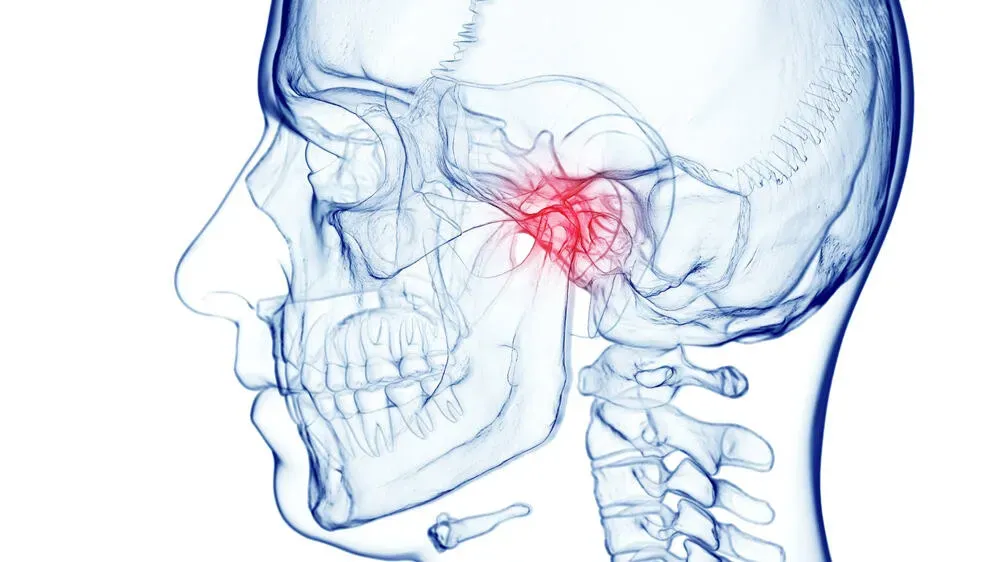
The temporomandibular joint is a small, complicated joint that has to open, close, slide forward, and rotate every time you eat or speak. When it stops doing any of those well — or starts doing them with pain, clicking, or locking — the effects reach well beyond the jaw. Headaches, neck pain, ear fullness, and facial tightness are all common travel companions.

Understanding TMJ disorders

The TMJ connects your lower jaw (mandible) to your skull at the base of the temporal bone. It’s supported by a small articular disc, a dense capsule, and the major muscles of chewing — the masseter, temporalis, and pterygoids. When any part of that system gets strained, inflamed, or starts moving incorrectly, the symptoms follow.

Common drivers of TMJ pain we treat at our Morganville clinic:

  • Bruxism (clenching and grinding). Often during sleep, often driven by stress, often unrecognized by the patient. The classic signature: a sore jaw first thing in the morning.
  • Upper-cervical joint dysfunction. Restrictions at the top of the neck change how the jaw sits and moves. Treating the neck often resolves what felt like a purely jaw problem.
  • Postural patterns. Forward-head posture shifts the jaw position and loads the TMJ abnormally for hours a day.
  • Disc displacement within the joint. The small disc inside the TMJ can slip out of position, producing clicking, popping, or locking of the jaw.
  • Muscle overuse and trigger points. Tight masseter, temporalis, and pterygoid muscles refer pain into the face, head, and ear.
  • Trauma. A blow to the jaw, dental work that was held open too long, or even a whiplash injury can set up chronic TMJ dysfunction.
  • Stress and sympathetic overdrive. Chronic stress increases resting muscle tone throughout the jaw and neck, which feeds the cycle.

Because the TMJ is so closely linked to the neck and posture, treating it well almost always involves treating the whole upper quadrant — not just the jaw in isolation.

Our multidisciplinary approach to TMJ

Our integrated team treats TMJ disorders from every angle the condition requires.

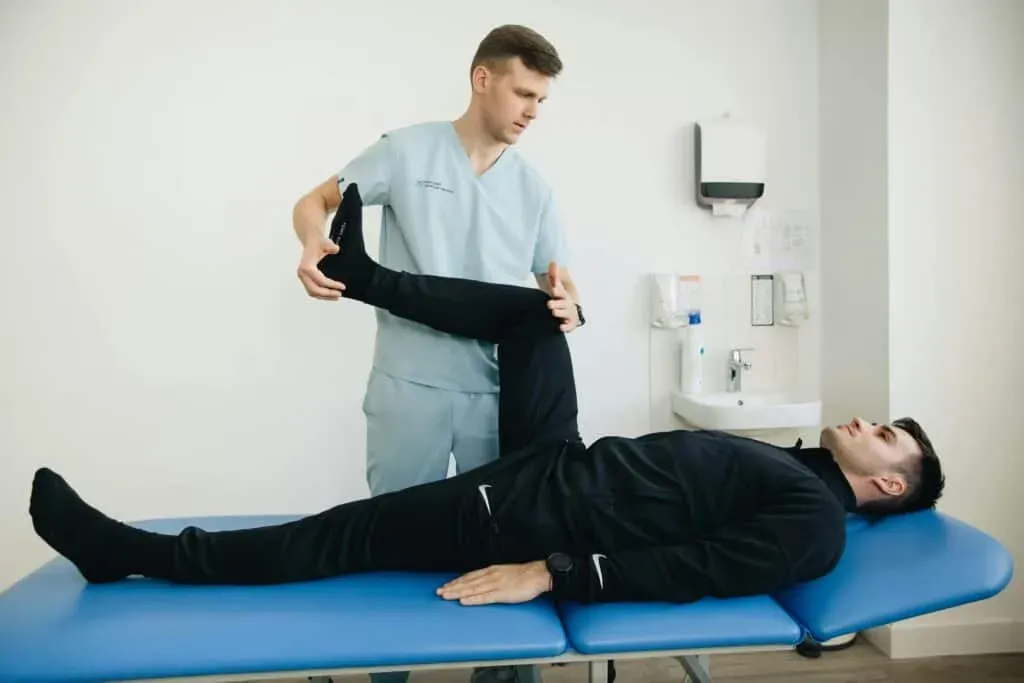
Physical therapy. Dr. Robert Perniola works on jaw mobility, neck posture, deep-neck-flexor retraining, and — when appropriate — internal soft-tissue work on the pterygoid muscles that can’t be reached from outside the mouth. This internal work, when clinically indicated and done briefly with a gloved finger, often produces dramatic relief.

Chiropractic care. Dr. Rick Caban addresses upper-cervical joint restrictions and the postural patterns that set up TMJ problems. Treating the atlas, axis, and upper thoracic spine is a consistent part of effective TMJ care.

Acupuncture. Particularly valuable for chronic jaw muscle tension, bruxism-driven pain, and the stress component that drives many TMJ cases. Well-placed points in the jaw, face, and upper neck produce meaningful reductions in muscle tone.

Soft-tissue therapy. Manual release of the masseter, temporalis, and surrounding structures — often the fastest route to symptomatic relief.

Education and self-management. Awareness of clenching habits, jaw-position retraining (“lips together, teeth apart”), stress-management strategies, and posture cues that patients take home and use daily.

What to expect on your first visit

Your first TMJ visit is a careful evaluation. We ask detailed questions about when symptoms started, what makes them worse (chewing, stress, sleep, cold weather), and whether you’ve been seen by a dentist, neurologist, or ENT. On exam we test jaw opening range, track the jaw during opening and closing, palpate the TMJ itself and the surrounding musculature, and assess the upper cervical spine and posture.

By the end of the visit you understand what’s driving your TMJ problem — most patients find this explanation is the first one they’ve gotten that actually fits their experience — and you have a specific plan. Treatment starts the same day.

Coordinating with your dentist

When a bite splint, dental work, or orthodontic consultation is part of the right plan, we coordinate with your dentist. Many TMJ cases improve fastest with both a dental appliance and a conservative treatment plan working together. We also screen for dental issues during our evaluation and will recommend a dental referral if we think your case calls for one.

Why TMJ cases come back (and how to stop that)

TMJ problems recur most often when the postural and habit components never get addressed. Someone can get their pain to zero in six weeks of good care — and then return three months later because they’re still clenching during work stress and still carrying their head forward at the computer. We spend real time on the self-management piece because that’s what keeps TMJ gone. Most patients leave with a small set of daily tools and a clear plan for what to do if symptoms try to creep back.

Empowering Your Recovery

Our Multidisciplinary Approach to TMJ Disorders

Three disciplines, one treatment plan, one office. Coordinated care that addresses the cause — not just the symptom.

Physical Therapy

Evidence-based physical therapy in Morganville, NJ for orthopedic injury, sports rehab, and post-surgical recovery. Same-day evaluations; most insurance accepted.

Read more →

Chiropractic Care

Expert chiropractic adjustments and manual therapies to correct misalignments, relieve pain, and enhance your body's natural healing abilities. Experience lasting relief through personalized, evidence-based care.

Read more →

Acupuncture

Licensed acupuncture for pain relief, stress, and inflammation in Morganville, NJ. Integrated with chiropractic and physical therapy under one roof.

Read more →

Personalized Care in Action

Personalized care, in action.

Our team addresses the root cause of your tmj disorders through tailored chiropractic, physical therapy, and acupuncture — not a templated protocol. Same-day appointments usually available.

Schedule Online Today

Your TMJ Disorders Recovery Journey

Discover the path to lasting recovery with our personalized, multidisciplinary care approach.

  1. Comprehensive Assessment

    We evaluate your condition, review your medical history, and run the necessary movement and neurological exams to understand exactly what's driving your pain.

  2. Personalized Treatment

    You begin a customized care plan — chiropractic adjustments, hands-on physical therapy, and acupuncture as needed — designed for your case and your goals.

  3. Progress Monitoring

    We re-assess your response to treatment every two to three weeks and adjust the plan to keep your recovery on the fastest, safest path.

  4. Long-Term Wellness

    As you progress, we shift focus to maintenance — home exercises, posture, and lifestyle strategies that keep the gains and prevent flare-ups.

Frequently Asked Questions About TMJ Disorders

Do I need to see a dentist first?

Not necessarily. If you have a dental cause — a misaligned bite, a broken filling, an impacted tooth — that piece is best handled by your dentist. But many TMJ disorders are driven by muscle tension, upper-cervical joint dysfunction, and clenching rather than by a dental problem. We often work in coordination with patients' dentists, particularly when a bite splint is part of the plan.

Will my jaw clicking ever go away?

Sometimes — and when it doesn't, it's often possible to get the pain to zero even if the click remains. A painless click is generally not a serious problem. A click with pain, locking, or significant dysfunction warrants evaluation and usually responds well to conservative care.

Why do I wake up with a sore jaw?

Almost always nighttime clenching or grinding (bruxism). Even patients who don't think they grind their teeth often produce significant jaw muscle activity during sleep. A combination of stress management, jaw and neck treatment, and — when indicated — a dental bite splint usually resolves the morning soreness.

Can TMJ cause headaches?

Yes — commonly. The temporalis muscle (over your temple) and the masseter (at your jaw angle) are large, powerful muscles that refer pain into the head when they're chronically overactive. Many patients who've been diagnosed with tension or migraine headaches actually have a significant TMJ component driving the pattern.

Is the treatment actually hands-in-mouth?

For some of it, yes. Internal pterygoid and masseter release — with a gloved finger, briefly — is part of comprehensive TMJ care. It's not every visit, it's not long, and it's done only with your permission. Most patients find the symptomatic relief worth the mild discomfort.

How long until I feel better?

Most TMJ patients feel noticeable improvement within three to five visits. A typical course of care is four to eight weeks, depending on how long the problem has been present and what's driving it. Patients with clenching or postural components usually need ongoing self-management — but the acute pain resolves early.

Does posture really affect my jaw?

Yes, more than most people realize. Forward-head posture pulls the jaw back and up, putting extra load on the TMJ. Fixing how you sit at a computer, how you sleep, and how you carry your head during daily activities is often what keeps TMJ problems from returning. We address posture as part of every TMJ plan.

Expert Care for Lasting Relief

Take Control of Your TMJ Disorders Today

Don't let tmj disorders control your life. We build personalized treatment plans around your case — chiropractic, physical therapy, and acupuncture working from the same goal: getting you back to what you love. Most insurance accepted; same-day appointments usually available.

Visit Our Morganville Office

Discover Limitless Health

Phone Number

(732) 972-6010

Office Hours

  • Mon: 9:00 AM – 7:00 PM
  • Tue: 8:00 AM – 12:00 PM
  • Wed: 9:00 AM – 7:00 PM
  • Thu: Closed
  • Fri: 9:00 AM – 5:00 PM
  • Sat: Closed
  • Sun: Closed

Fax Number

(732) 972-3862