You know the feeling. You stand up from your desk and a bolt of pain fires from your lower back, through your hip, and down the back of your leg. Maybe it started as a dull ache a few weeks ago, but now it’s waking you up at night. You’ve tried stretching. You’ve tried the heating pad. You’ve Googled “why does my leg go numb when I sit” more times than you’d like to admit. And yet here you are, still in pain, still wondering if this is just something you have to live with now.
It’s not. Sciatica is one of the most common reasons patients walk through our doors at Limitless Spine & Joint Care in Morganville, and it’s also one of the most misunderstood. The good news is that most cases of sciatic nerve pain respond extremely well to conservative, non-surgical treatment when the actual source of the problem is identified and addressed. The key word there is “actual.”
Why most sciatica treatments only offer temporary relief
Here’s what typically happens. You tell your doctor your leg hurts. They confirm it’s sciatica, hand you a prescription for anti-inflammatory medication or a muscle relaxer, and tell you to rest. Maybe they refer you out for physical therapy or suggest a cortisone injection if it’s bad enough. A few weeks later, you feel a little better. A few months later, the pain is back, sometimes worse than before.
The problem isn’t that those treatments don’t work at all. It’s that they’re treating the symptom — pain and inflammation along the sciatic nerve — without addressing why that nerve is being compressed or irritated in the first place. Pain medication turns down the volume on the alarm, but it doesn’t put out the fire. And isolated treatments that only focus on one piece of the puzzle, whether that’s a single adjustment or a generic stretching program, often fall short because sciatica rarely has a single, simple cause.
What most people don’t realize is that “sciatica” isn’t actually a diagnosis. It’s a description of a symptom pattern: pain that radiates along the path of the sciatic nerve. The real question, and the one that matters for getting lasting relief, is what’s causing the nerve to be irritated in the first place.
The anatomy behind the pain
The sciatic nerve is the longest and thickest nerve in your body. It originates from nerve roots in your lower lumbar spine (L4 through S3), threads through your pelvis, runs deep beneath the piriformis muscle in your glute, and travels all the way down the back of your leg to your foot. At any point along that path, something can go wrong.
The most common culprits include herniated or bulging discs in the lumbar spine that press directly on the nerve roots, narrowing of the spinal canal (spinal stenosis), and tightness or dysfunction in the piriformis muscle that compresses the nerve as it passes through the hip. Less commonly, joint inflammation, bone spurs, or prolonged sitting postures contribute to nerve irritation.
Here’s where it gets interesting — and where a lot of providers miss the bigger picture. In many patients, sciatica isn’t caused by just one of these factors. You might have a mild disc bulge that wouldn’t cause symptoms on its own, but combine it with a pelvis that’s slightly rotated, hip muscles that are tight and weak from sitting all day, and a lower back that’s lost its normal curve, and suddenly that nerve is being irritated from multiple directions. This is why the “adjust it once” or “stretch it out” approach so often fails. You need to address the full chain of dysfunction, not just the loudest link.
Think of it like a garden hose with a kink in it. Sometimes there’s one sharp bend causing the blockage. But often, the hose is twisted in two or three places, and if you only straighten out one section, the water still won’t flow properly.
How we treat sciatica differently
At Limitless, we approach sciatica the way it should be approached: as a multi-layered problem that requires a coordinated, multidisciplinary solution. Because we offer chiropractic care and physical therapy under one roof, your treatment plan isn’t fragmented across different offices with different providers who never talk to each other. Dr. Rick Caban and Dr. Robert Perniola work together to build a plan that targets every layer of your sciatica — from spinal alignment to muscular rehabilitation to pain management.
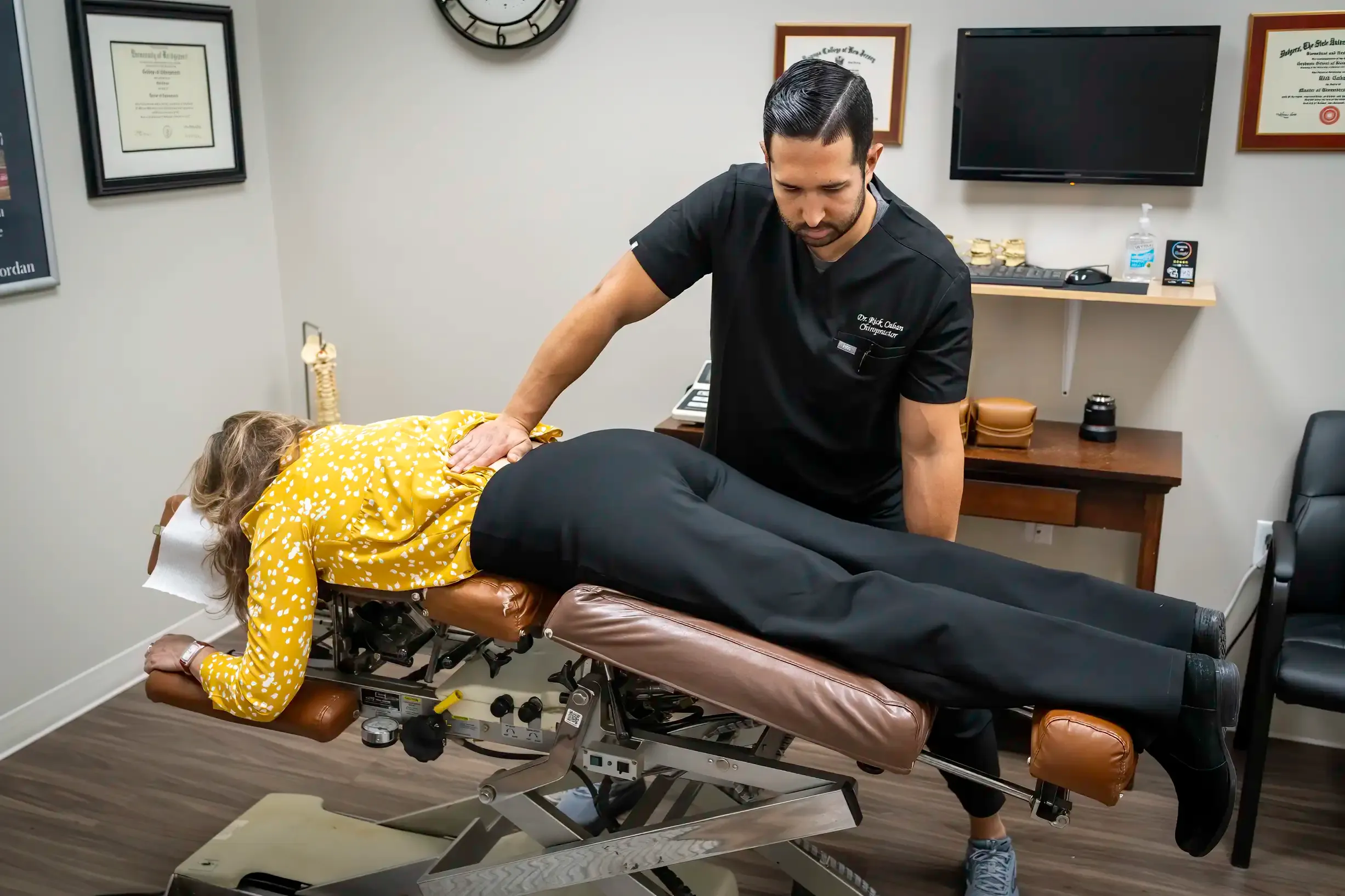
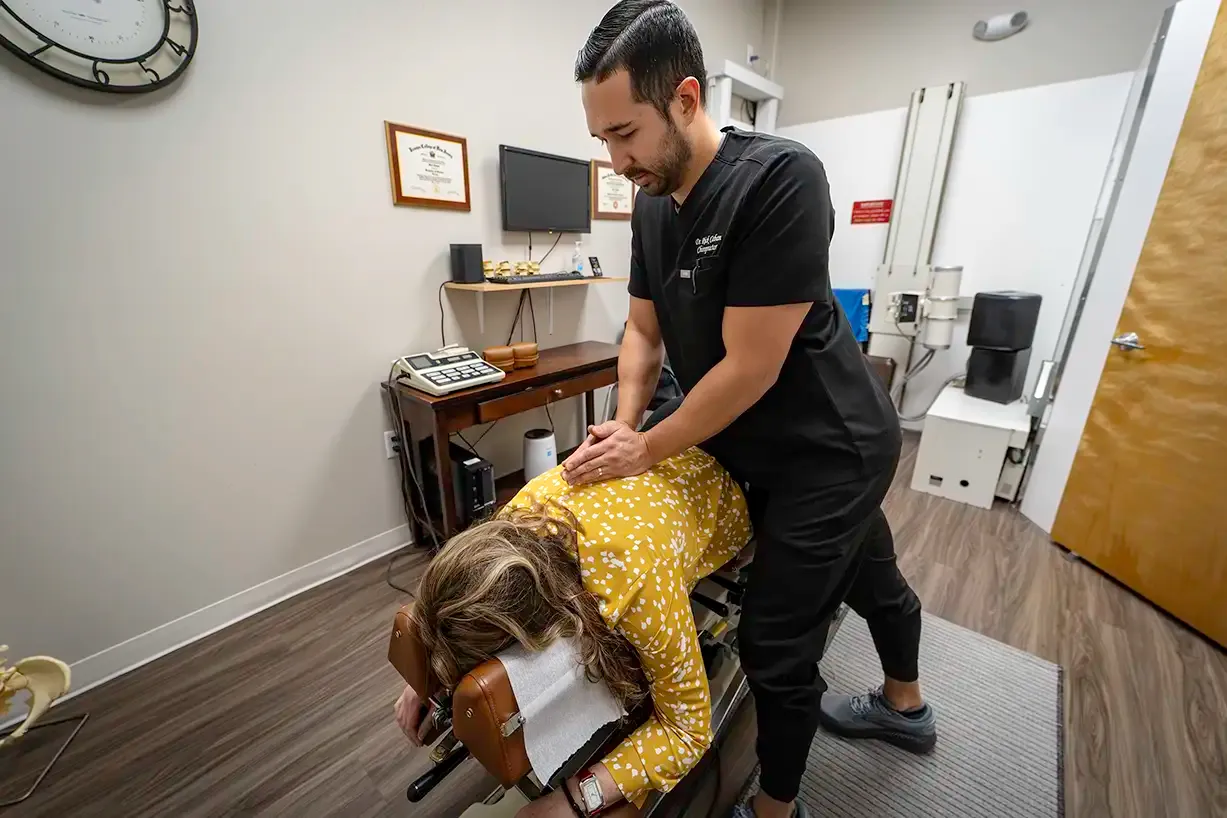
Chiropractic adjustments are often the foundation of sciatica treatment at our clinic. Dr. Caban uses techniques including Flexion Distraction — a gentle, low-force method specifically designed for disc-related sciatica that creates negative pressure in the disc space to take pressure off the nerve root. For patients whose sciatica stems from joint misalignment or pelvic dysfunction, Gonstead and Chiropractic Biophysics protocols help restore proper spinal mechanics. These aren’t one-size-fits-all adjustments. The technique is chosen based on your specific imaging, exam findings, and the underlying cause of your nerve irritation.
Physical therapy with Dr. Perniola then builds on that foundation. Once we’ve reduced the mechanical compression on the nerve, targeted rehabilitation strengthens the muscles that support your spine and hips, corrects movement patterns that contributed to the problem, and restores the flexibility you’ve lost. This is the piece that turns short-term relief into long-term results. Without it, the same postural habits and muscular imbalances that caused your sciatica will simply recreate it over time.
What your first visit for sciatica looks like
If you’ve never been to a chiropractor or you’ve had a bad experience elsewhere, we understand the hesitation. Here’s exactly what to expect.
Your first visit starts with a thorough consultation where we listen to your full history: when the pain started, what makes it better or worse, what you’ve already tried, and what your goals are. From there, Dr. Caban performs a comprehensive exam that includes orthopedic and neurological testing to pinpoint where the nerve is being affected. If needed, we take digital X-rays right in the office to evaluate your spinal alignment and rule out structural issues. We may also use a computerized range-of-motion exam to objectively measure how the sciatica is limiting your movement.
Once we have a clear picture of what’s driving your pain, we walk you through the findings, explain what we’re seeing, and lay out a specific treatment plan. Many patients begin treatment the same day and notice a meaningful change in their symptoms within the first few visits. We’re always honest about expectations: some cases of sciatica resolve quickly, while others — particularly those involving significant disc herniations or long-standing nerve irritation — require a more extended timeline. Either way, you’ll understand the plan and the reasoning behind every step.
You don’t have to keep living around the pain
Sciatica has a way of shrinking your life. You stop bending down to pick things up. You avoid the golf course. You dread the morning commute. You start making mental calculations about every chair, every car ride, every pair of shoes. That’s no way to live, and it doesn’t have to be your reality.
If you’re in Morganville, Marlboro, or anywhere in Monmouth County and you’re tired of chasing temporary fixes for sciatic nerve pain, we’d love to help you find a real solution. Same-day appointments are available and most insurance plans are accepted. Call (732) 972-6010 or schedule online.